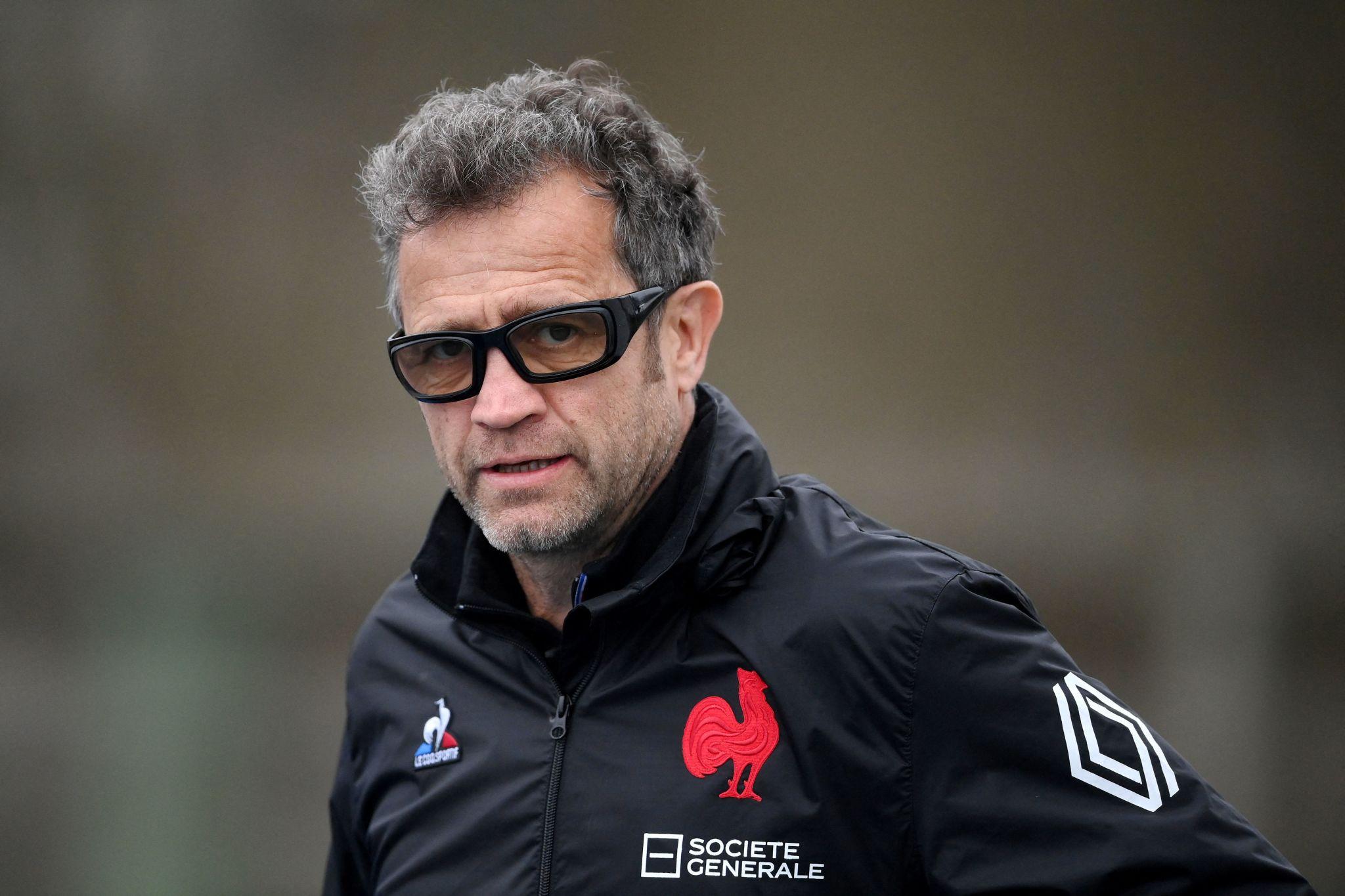
Two matches into the 2026 Six Nations, a question already feels unavoidable: has Fabien Galthié’s bold squad gamble paid off?
Last November, the France head coach laid out his vision with characteristic clarity. “In our vision for the next two years, we understood that we had to develop the squad and give experience to other players to have three per position.”
Three players per position. Two years to build it.
It was not a new idea. When Galthié took charge in December 2019, he began methodically trawling the Top 14 and Pro D2, mapping out a pool of up to 75 players capable of stepping into Test rugby. The objective was depth, competition, and resilience — lessons sharpened by the road to the 2023 Rugby World Cup.
What did surprise many, however, was how aggressively that philosophy was applied ahead of the 2026 Championship.
When Galthié named his first 42-man squad, the omissions were striking. No Damian Penaud, France’s record try-scorer. No Gaël Fickou, just two caps short of a century. No Grégory Alldritt, the heartbeat of the back row. The decision prompted immediate debate.
Former Wales and Toulon fly-half Dan Biggar summed up the stakes neatly: if France won a Grand Slam, it would be a masterstroke. If they fell short, questions would inevitably follow.
Trusting the Next Wave
From Galthié’s perspective, the logic was simple. The next generation was already there — it just needed exposure.
Several of the younger players had impressed during the July 2024 tour of Argentina and again on the 2025 tour of New Zealand, even as critics questioned why established stars were left behind during a demanding club season. Caps accumulated quietly, cohesion grew, and a new core began to emerge.
By the time France opened their campaign against Ireland, the profile of the squad told its own story. Slightly younger than their opponents — 27 years on average compared to Ireland’s 29 — but also less experienced: 586 caps to Ireland’s 673, bench included.
It didn’t matter. France dismantled Ireland 36–14 in what was widely described as a benchmark performance.
Cardiff Confirmation
If Dublin was a statement, Cardiff was confirmation.
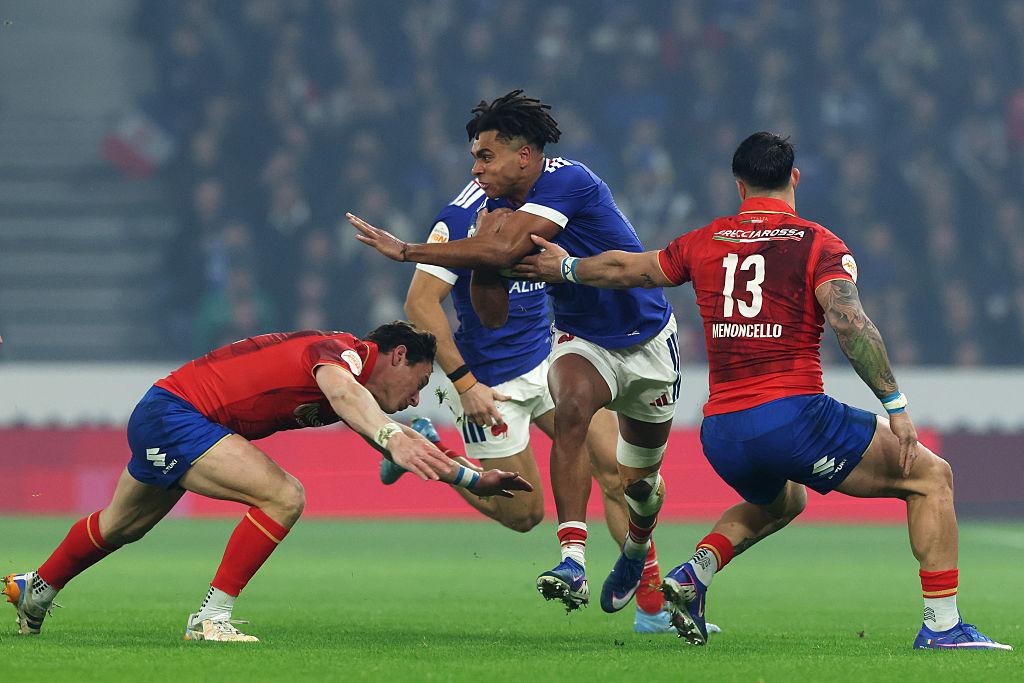
Wales may not currently sit at Ireland’s level, but winning 54–12 in the Welsh capital is never routine. France tore through the hosts with ruthless efficiency, showing the same clarity of purpose and control.
Once again, the squad depth told. Young players slotted seamlessly into the system, raising standards rather than lowering them. The 42-man structure ensured competition for every jersey, every week.
In one performance alone, Fabien Brau-Boirie — later nominated for Weekend MVP — reshaped the midfield conversation while Yoram Moefana watched on injured. It underlined the scale of Galthié’s impending dilemma: when the senior figures return, selection will be brutally competitive.
A “rich man’s problem” — and a rare one in French rugby history.
More Than Just Personnel
Crucially, this evolution goes beyond names on a team sheet.
Galthié’s staff now operate with the freedom to shift game plans mid-match, depending on who is on the field. Against Wales, France executed one tactical approach in the first half, then switched seamlessly after the break — both proving effective.
“It’s a collective performance above all,” Galthié explained. “The players manage to express themselves within the team.”
The 42-player model is demanding. Every Wednesday, 14 players are released, often frustrated. Yet those same players have spent three intense days embedded in match preparation — another deliberate part of the process.
“I thank the players because they accepted the challenge we offered them,” Galthié said. “It changes a bit from the usual, and for the moment it’s holding up well.”
Momentum Building
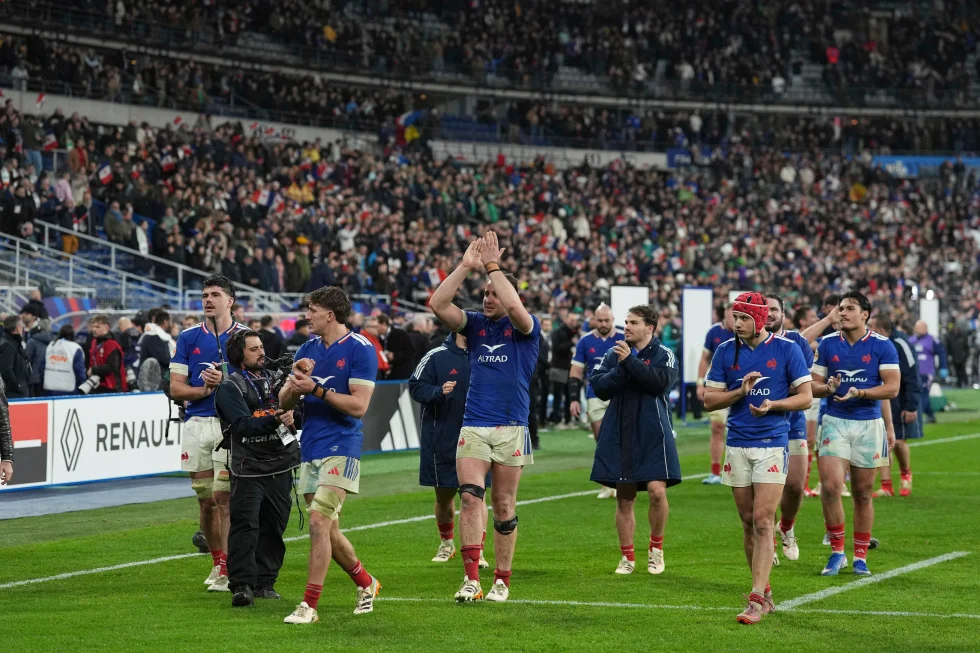
With Italy, Scotland, and England still to come, the Championship is far from decided. But after two emphatic victories, the early verdict is hard to ignore.
France are winning — and doing so without relying on familiar stars.
Two matches in, Galthié’s long-term gamble already looks less like a risk and more like a foundation. And the sense is that this momentum is only just beginning.
 English