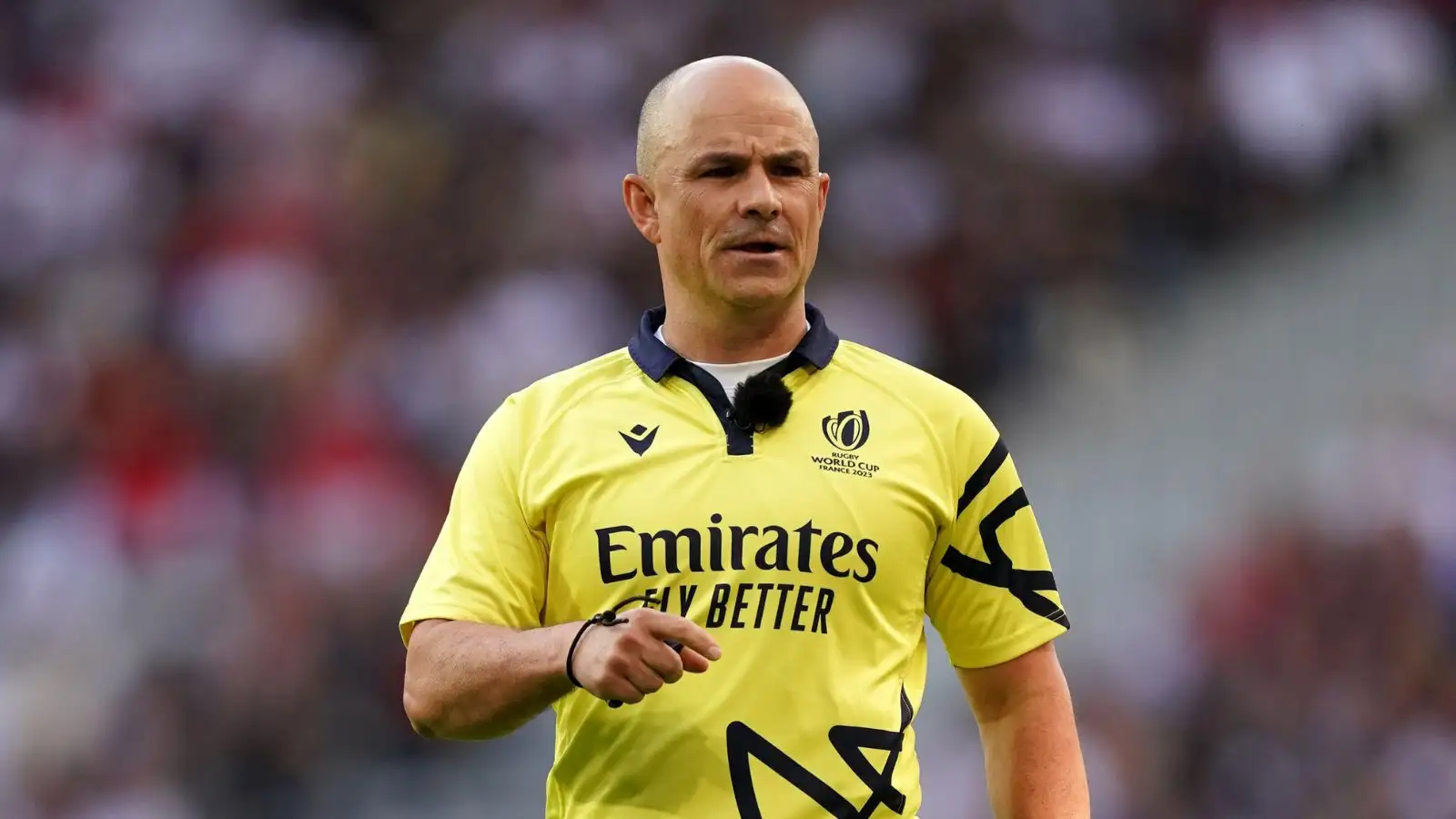
Former international referee Jaco Peyper believes some of Super Rugby Pacific’s new law trials may have the opposite effect to what organisers intend, potentially slowing the game down rather than speeding it up.
Tournament officials confirmed on Monday that fresh measures will be introduced in a bid to reduce stoppages, promote positive play and simplify officiating. Among the key changes, accidental offsides and delays in playing the ball away from a ruck will now result in free-kicks instead of scrums. Teams will also no longer have the option to choose a scrum from a free-kick.
Players will be permitted to take quick taps within a one-metre radius either side of the mark, or anywhere behind it within a two-metre channel parallel to touch. The overall aim is to increase ball-in-play time and cut down on dead time.
But Peyper, now SA Rugby’s national laws advisor, is not convinced.
Speaking after Springboks assistant coach Felix Jones raised concerns about the impact on scrums, Peyper argued that free-kicks often disrupt momentum, particularly when awarded to a team not in possession.
“The intention is to keep the game dynamic,” Peyper explained. “But in my experience, if you give a free-kick to the team that doesn’t have the ball, it slows things down because there has to be a transfer of possession.”
He suggested that instead of encouraging continuity, the change could lead to more kicking. Teams receiving a free-kick without immediate possession are unlikely to tap quickly and play. Instead, they may reorganise and opt for an up-and-under, potentially increasing stoppages rather than reducing them.
“I’ve given a lot of free-kicks in my life,” Peyper said. “Unless the team already has the ball and can tap and go, you don’t always get the reward of faster play.”
Jones, meanwhile, questioned whether reducing scrums addresses the real issue. He pointed out that data shows the number of scrums has remained relatively consistent in recent years, though resets may have increased.
“I get the idea of wanting more action,” Jones said, “but I’m not sure we should be changing one of the purest contests in rugby.”
Both men suggested that improving officiating standards could be a more effective solution than altering the laws. Peyper argued that the world’s top referees tend to manage scrums with fewer resets, raising the possibility that investment in referee development, rather than law changes, could deliver better results.
The Super Rugby trials are expected to provide data to assess their impact, but for now, Peyper remains cautious — warning that well-intentioned innovation could unintentionally slow the very spectacle it seeks to enhance.


 English