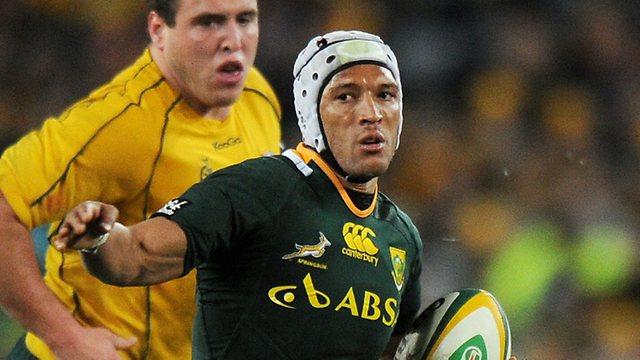
Gio Aplon is not questioning what the Springboks have achieved. He is looking at what comes next.
Speaking on the Behind the Ruck podcast, the former Springboks back shared a concern that feels rooted in the future rather than the present. For Aplon, the decision to already be looking as far ahead as the 2031 Rugby World Cup, with Rassie Erasmus backed to lead that cycle, does not sit entirely right.
“I’m very cautious with 2031,” he said. “We haven’t even played this World Cup and you’re giving him the job.”
This is not about doubting Erasmus. Aplon makes that clear. His concern is about the bigger picture and what the current structure might mean for the next wave of South African coaches.
Because the question he keeps coming back to is a simple one. Where do they go?
He points to coaches like John Dobson and Johan Ackermann, men who have built strong reputations in the game, and wonders what their pathway looks like from here. If the top job is effectively settled years in advance, what opportunities remain for those trying to take that next step?
When he looks at New Zealand, he sees something different. A system that feels fluid and deep. Coaches like Pat Lam, Andrew Goodman, Dave Rennie, Robbie Deans and Jamie Joseph are all part of a wider ecosystem that continues to produce and recycle high level coaching talent. There is movement, competition and, importantly, continuity.
By contrast, Aplon worries South Africa may be standing still.
“It feels like our system is getting stuck,” he said.
The real concern is not immediate. It is about what happens when this current cycle eventually comes to an end. Rugby at the highest level does not leave room for uncertainty, and transitions tend to expose any gaps that have been ignored.
That is where Aplon draws a comparison that is hard to ignore.
Manchester United after Sir Alex Ferguson.
A club that once set the standard suddenly found itself searching for direction. Managers came and went. Identity faded. Stability became something they were chasing rather than something they had.
Aplon fears South African rugby could find itself in a similar position if it does not plan carefully for what comes after this era.
“We’re going to come to that point where the next coach takes over and it’s too late, and we’re not going to have an identity,” he said.

 English